Sunday, 24 April 2016

Goldman Sachs Pegs $20-40 as New #Oil Order Range


THE NEW OIL ORDER" AND THE COMMODITY CYCLE


After a decade-long “investment phase” that helped unleash the shale revolution, oil is seeking a new equilibrium between supply and demand. Jeff Currie, head of Commodities Research for Global Investment Research at Goldman Sachs, describes how the market has entered an “exploitation phase” that puts downward pressure on prices.  

 PUTTING SENSE  TO  AN INDUSTRY'S TRANSFORMATION 

Image result for oil industry


MAKING SENSE OF OIL VOLATILITY


Our outlook going forward…is that prices will likely remain trendless, with significant volatility between operational stress at $20 a barrel and financial stress at $40 a barrel.”  
– Jeff Currie


2016 GLOBAL OIL INDUSTRY OUTLOOK

"The position that we are likely to be in by the end of 2016 is a more balanced physical market, but a supply chain that is still highly deflationary and the full equilibrium price over time will keep shifting lower."

– Michele Della Vigna


LOWER FOR LONGER?: THE IMPACT OF "THE NEW OIL ORDER"

The decline in oil prices is, on balance, we think a positive for global economic activity. The oil consumers are generally getting a boost.” 
– Jan Hatzius


IRAN’S POTENTIAL IMPACT ON THE GLOBAL ENERGY MARKETS


"There is a substantial potential here for increase [in production]… but it’s going to take time”
- Jeff Currie


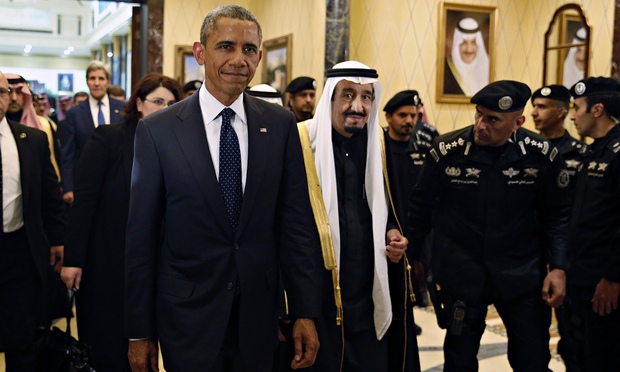
Image result for goldman sachs building

Saturday, 23 April 2016

More Woes for Schlumberger


Less spending on oil and gas exploration taking its toll on one of the sector's largest companies.


Schlumberger Revenue Takes Nose Dive


HOUSTON, April 22 (UPI) -- Schlumberger, the largest oil field services company in the world, said its first quarter revenue experienced one of its sharpest declines since 2014.
The company said revenue through March 31 was $6.5 billion, a 16 percent drop from the previous quarter and 36 percent lower year-on-year.
Chairman and CEO Paal Kibsgaard said in a statement the sequential decrease was one of the largest since crude oil prices started moving sharply lower near the end of 2014.
"This was driven by a continuing drop in activity and persistent pricing pressure throughout our global operations as well as from project delays, job cancellations and activity disruptions," he said.
Lower crude oil prices, off about 60 percent from the 2014 highs, have left energy companies with less capital to invest in exploration and production activity, the side of the industry companies like Schlumberger serve.
In North America alone, Kibsgaard said the inland rig count was about 80 percent lower than it was in October 2014. First quarter revenue for Schlumberger in North America was $1.5 billion, a 25 percent decline from fourth quarter 2014.
Last month, Kibsgaard told industry leaders at an energy conference in New Orleanscorporate evolution from the services sector may be a necessity. Project performance, he said, can only be improved by leaving the downturn behind and adopting a new approach "based on collaboration and commercial alignment between the operators and the largest service companies."
In its quarterly statement, Schlumberger outlined details of three separate mergers during the first quarter, including the $1.24 billion deal with its smaller industry counterpart Cameron International Corp.
Looking forward, Kibsgaard said he expected spending cuts in exploration and production would be sharper than previously expected, even though there's been a recovery in crude oil prices he said was triggered by supply disruptions, like last weekend's strike in Kuwait, and talks of a production freeze among major oil states.
"We will continue to tailor costs and resources to activity, while remaining cautious in adding back capacity given the unpredictable nature of the current market," he said.

Friday, 22 April 2016

Education of Women Key To Advancing Human Condition


Why Organized Religion Fears Educated Women


Educating women improves the welfare of families as they become empowered to contribute to the financial success of their household—which in turn creates more opportunities and resources available for their children.  
For thousands of years women have been defined only in correlation to their relationship to men. They have been kept hidden, prohibited from speaking, forced into submission and treated as the “unclean” gender whose existence is that of mental and physical servitude to her human counterpart. Why has so much emphasis been placed upon the mind and actions of women? What does organized religion fear about the mind of an educated and logically-thinking woman?
Here are 5 reasons why organized religion fears educated women:

The Loss of Patriarchal Control

Image result for big brotherIt is a widely-known fact that the more educated and financially stable a woman becomes, the more likely she is to practice family-planning and have her children at a later age. Educated women are also more likely to have fewer children than their uneducated and impoverished female counterparts.
Furthermore, educated women are more likely to cultivate their own worldview, rather than simply following their traditional familiar teachings; and may contribute no followers to a religion when they do finally decide to start a family.
This is a problem for religion because women who choose the timing and size of their household don’t typically contribute the same amount of future-followers to a religion as those women who are restricted from pursuing an education and career. If a woman leaves the religion altogether as a direct result of becoming well-informed and financially stable and no longer needs the “comforts” that her religion once provided, she has not only removed herself from the ranks, but her children as well. For religion to perpetuate itself, it must have followers, or it ceases to exist.

Today's ENERGY News - 22 April 2016


Top Stories 


 IEA chief says oil market, prices to return to balance by 2017


International Energy Agency’s (IEA) Executive Director Fatih Birol speaks at a news conference on the sidelines of G20 Energy Ministers Meeting in Istanbul, Turkey, October 2, 2015. International Energy Agency (IEA) chief Fatih Birol said on Thursday he expects the oil market to come back into balance from oversupply by next year, providing there is no major economic downturn. Birol said low oil prices have cut oil investment by about 40 percent in the past two years, with sharp falls in the United States, Canada, Latin America and Russia, and the world’s reliance on Middle East oil will accelerate substantially in the next few years. “This year, we are expecting the biggest decline in non-OPEC oil supply in the last 25 years, almost 700,000 barrels per day. At the same time, global demand growth is in a hectic pace, led by India, China and other emerging countries,” he told […]

Obama and King Salman of Saudi Arabia Meet, but Deep Rifts Remain


President Obama and King Salman of Saudi Arabia spent more than two hours in a closed-door meeting that American officials said was cordial but underscored deep differences with the kingdom over Iran, human rights and the best way to fight terror. The two leaders met in Riyadh on Wednesday against the backdrop of a public debate in the United States Congress about a bill that would allow the Saudi government to be held legally responsible for the Sept. 11, 2001, attacks if it is established that any officials played a role — a charge Saudi officials have long denied. Administration officials said the issue of the Sept. 11 attacks did not come up during the meeting with the king at Erga Palace, an opulent compound lined with palm trees and […]

Saudi Arabia forced to BORROW $10 billion as tumbling oil prices continue to hit the kingdom’s finances

Saudi Arabia is being forced to borrow $10 billion as the world’s top oil exporter seeks to fill a record budget deficit caused by low crude prices. The kingdom had initially been seeking to raise between $6billion and $8billion through a loan lasting for five years for its first foreign borrowing in more than a decade. But the Ministry of Finance raised the amount after drawing significant demand. Sources said the loan should be signed before the end of April, with one saying the lenders included a mix of U.S., European and Japanese banks. An official watches progress at a rig at the al-Howta, Saudi Arabia. The kingdom is being forced to borrow $10 billion as the world’s top oil exporter seeks to fill a record budget deficit caused by low crude prices Another said the lead arrangers included JP Morgan, HSBC and Bank of Tokyo-Mitsubishi. Each was contributing […]

Kuwait Oil Workers End Strike

Kuwaiti oil workers sit at the union’s headquarters in Al-Ahmadi, south of Kuwait City, on… Oil workers in Kuwait have ended a three-day strike that had almost halved crude output in the Organization of the Petroleum Exporting Countries’ fourth-largest producer, after the government said it wouldn’t negotiate while the walkout lasted. Workers resumed their jobs earlier Wednesday “out of respect for the country’s emir” after successfully showing the importance of their role in the economy, the oil-workers union said in a news release. The move came just hours after Kuwait’s acting oil minister, Anas al-Saleh, ruled out negotiations with the employees until they ended their strike and said the country’s oil sector would continue to operate despite the strikes. “The goal in going on strike was to send a clear message,” the Union of Petroleum and Petrochemical Workers said in the statement. “The workers reiterated in their action their […]

Iran’s Dilemma: Too Much Oil And Not Enough Ships


Late last week, just ahead of the Doha meeting, we reported that Iran’s existing oil tanker armada, which until recently had been on anchor next to the Iranian coast and which according to Windward data was storing as much as 50 million barrels offshore, had finally started to move. The reason, as Bloomberg reported , was that tankers carrying about 28.8 million barrels of crude, or more than 2 million a day, left the Persian Gulf country’s ports in the first 14 days of April. That compares with a rate of about 1.45 million barrels a day in March. As a result, Iran’s crude shipments have soared by more than 600,000 barrels a day this month, and offset the entire production decline of U.S. producers with just half a month’s incremental production. However, now that the shipping armada has sailed to its various (mostly Asian) destinations, it may be […]

Thursday, 21 April 2016

Today's ENERGY News - 21 April 2016


Top Stories 


Lithium War Heats Up After Epic Launch


 Of Tesla Model 3


The unveiling of Tesla’s Model 3 electric car was no less than the lifting of the final curtain on a game-changing energy revolution. And if we follow that revolution to its core, we arrive at lithium—our new gasoline for which the feeding frenzy has only just begun. Unveiled just on 31 March and already with 325,000 orders, it seems that the market, too, understands that the Model 3 is more than just another electric vehicle. In one week alone, Tesla has racked up around $14 billion in implied future sales, making it the “biggest one-week launch of any product ever.” (And if you think the “implied future sales” negates the news, think again: Each order requires a $1,000 refundable deposit. ) It will change the world because it is the first hard indication that the tech-driven energy revolution is not only pending, it’s arrived. The Model 3 and its […]


Kuwait’s Oil Output Set to Return to Normal After Strike Ends

Kuwait’s oil production is set to return to normal in three days after thousands of striking workers returned to their jobs Wednesday. OPEC’s fourth-largest producer will boost output to an average of 3 million barrels a day in three days, according to a statement from Kuwait Petroleum Corp. on Wednesday. Output was 1.5 million barrels a day on Tuesday compared with 1.1 million on Sunday. Oil refineries are still operating at about 520,000 barrels a day, Khaled Al-Asousi, spokesman at state refiner Kuwait National Petroleum Co., said in a text message. Plants had been operating at that rate, less than 60 percent of capacity, since the strike began on Sunday. The 13,000 members of the Oil & Petrochemical Industries Workers Confederation went on strike to protest cuts in pay and benefits as Middle Eastern crude exporters reduced subsidies and government handouts to cope with falling oil prices. A global […]

Exclusive: Iran struggles to find enough ships for oil exports

Malta-flagged Iranian crude oil supertanker ”Delvar” is seen anchored off Singapore March 1, 2012. Iran faces a struggle to increase oil exports because many of its tankers are tied up storing crude, some are not seaworthy, and foreign shipowners remain reluctant to carry its cargoes. Tehran is seeking to make up for lost trade to Europe following the lifting of EU sanctions imposed in 2011 and 2012, which deprived it of a market that accounted for over a third of its exports and left it relying completely on Asian buyers. Iran has 55-60 oil tankers in its fleet, a senior Iranian government official told Reuters. He declined to say how many were being used to store unsold cargoes, but industry sources said 25-27 tankers were parked in sea lanes close to terminals including Assaluyeh and Kharg Island for this purpose. Asked how many tankers were not seaworthy and needed […]

What Oil Glut? Outages Put Supply, Demand Close to Balance

Oil-producing governments across the world are scrambling to address petroleum outages that have taken nearly 2 million barrels a day off the market and sent crude prices rallying.  The outages have been caused by an oil-worker strike in Kuwait, alleged pipeline sabotage in Nigeria and payment disputes in Iraqi Kurdistan. The missing oil supply—about 1.85 million barrels a day—has essentially brought the oil market’s supplies back into balance with demand, if only temporarily, and raised questions about big producers’ ability to quickly ramp up during supply outages.  The situation offers a glimpse of what the oil market would look like if the current glut were to end after nearly two years of weighing on prices. Oil demand is expected to average 94.8 million barrels a day in the first quarter of 2016 compared with oil supply of 96.4 million barrels a day.


Russian Oil Output, Exports May Rise After Doha Deal Fails


 Just two days after the collapse of international oil-supply talks in Doha, Russia signaled it isn’t afraid to play a game of chicken. Freed from a plan to coordinate output with OPEC members, Russian officials said Tuesday that the country may boost both production and exports. Daily output in 2016 could grow by 100,000 barrels to 10.81 million, according to Deputy Energy Minister Kirill Molodtsov. “And why not?” he said at the National Oil and Gas Forum in Moscow. “It’s possible.” Talks among major oil […]