Monday, 4 April 2016

Electric Cars Leading the Conversion


We Need to Electrify As Much Transportation As We Can 


Transcript:

JESSICA DESVARIEUX, PRODUCER, TRNN: Welcome to the Real News Network. I'm Jessica Desvarieux in Baltimore.
Folks are lining up to reserve electric car automaker Tesla's Model 3. It's considered to be one of the first electric cars for the mass market at an expected price tag of 35 thousand dollars. Tesla's CEO, Elon Musk, will be unveiling the vehicle on Thursday evening, so we can't show you what it will actually look like. But in this segment we wanted to get beyond the consumerism and ask, will this be a game changer for the automobile industry in America and the environment?
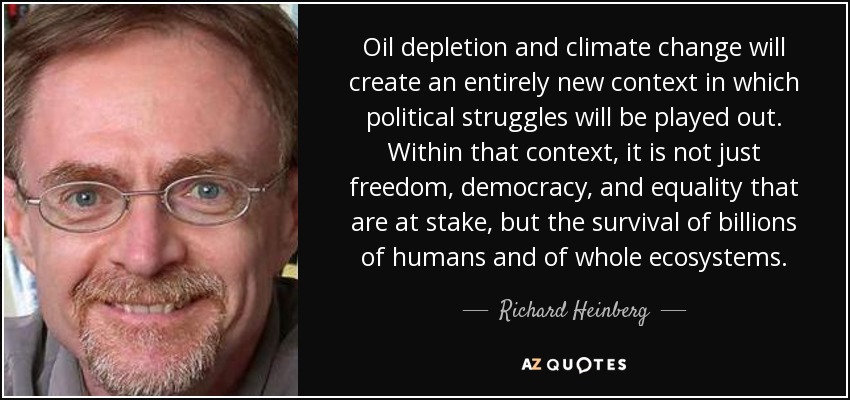
Now joining us to help us answer that question is Richard Heinberg. He's a senior fellow at the Post Carbon Institute. Thanks so much for joining us, Richard.
RICHARD HEINBERG: It's a pleasure, Jessica.
DESVARIEUX: So, Richard, why has it taken so long for an affordable electric car to sort of come to the market? I'm reminded of the 2006 documentary "Who Killed the Electric Car?" which really highlights how we essentially went from having electric cars on California roads in the '90s to then, eventually, shredding and destroying those very same vehicles years later. So my question to you, Richard, is, who killed the electric car?
HEINBERG: Well, the bosses at the Detroit automakers decided back in the 1990s that there wouldn't be a mass market for the electric car because of the short range of the vehicles. They thought consumers wouldn't buy a car if it didn't have a two to three hundred mile range, and the batteries at that time were not capable of delivering that kind of range. So even though they built some prototypes and sent them out to drivers, they never produced a mass market car.
Image result for tesla model 3
Today, battery technology has improved enough so that it is possible to produce an electric car for the masses with at least a 200-mile range, and that's what's anticipated for the Tesla Model 3.

DESVARIEUX: Okay. there are some folks that are saying that this isn't as big of a game changer as people are making it out to be, because essentially you're getting power to charge your electric vehicle from fossil fuel sources like coal. Do you agree with that?
HEINBERG: Not entirely. First of all, the energy mix is different in different parts of the country. Some parts of the country, electricity is mostly coming from coal. In other parts of the country the mix is more oriented toward natural gas, hydro and renewables. So, first of all, it depends on where you're getting your electricity from.
And second, you know, if you look out at the energy transition that we're just beginning right now, away from fossil fuels toward renewables, it's clear that one of the main strategies that we'll have to pursue during this energy transition is electrification. Right now only about 20 percent of the final energy that we use in the United States is in the form of electricity. The rest is in the form of liquid fuels for transportation, energy for high heat industrial processes and so on.
We have to electrify as much of that energy usage as we can, because most of our renewable sources of energy produce electricity. That's true of solar and wind, geothermal and hydro power. So we need to electrify as much transportation as we can.
DESVARIEUX: Okay. You have some automakers, you know, really touting this as a bright future, that we're going to see more and more electric cars hit the market. I want to ask you about the role of cheap oil. Do you think that threatens he growth of the electric car industry?
HEINBERG: Well, probably not over the long run. We're headed toward electric cars one way or the other, I think. However, over the short run it definitely takes some wind out of the sails, because from the consumer's standpoint the biggest draw for an electric car is that over the lifetime of ownership the operating costs are much lower, so if you have cheap gas that changes that differential a bit, so that there's not as much of an advantage.
DESVARIEUX: Okay, let's talk about the future. What would a truly green transportation system look like, and are there some states or countries that are really laying out a road map to get us there?
HEINBERG: Well, a truly green transportation system probably wouldn't rely on electric cars that much because it wouldn't be relying on cars that much. Cars are an inherently inefficient mode of transportation. I mean, think about it. Most cars just have a driver and maybe one passenger, and meanwhile you're dragging around two tons of metal, glass and plastic in order to get those one or two people where they want to go.
Much more efficient modes of transportation are light rail, any kind of public transportation, actually. So what we really need is to build up more rail transport and get people walking and bicycling as much as possible.
DESVARIEUX: Okay. Richard Heinberg, thank you so much for joining us.
HEINBERG: It's been a pleasure. Thanks, Jessica.
DESVARIEUX: And thank you for joining us on the Real News Network.
DISCLAIMER: Please note that transcripts for The Real News Network are typed from a recording of the program. TRNN cannot guarantee their complete accuracy.

Image result for real news network


Today's ENERGY News - April 4, 2016


Top Stories 


‘Fragile five’: These OPEC producers are


 on the verge of collapse if oil prices don’t


 stabilize soon


FP0401_Oil_fragile_5_C_MF

The global oil price rout has left many oil producers reeling across the world. From Canada to Norway, Saudi Arabia to Russia, none of the world’s largest oil exporters have been spared from oil prices that declined 45 per cent last year alone. While some of the biggest producers will stumble along, five oil-producing economies are on the verge of collapse if oil prices do not stabilize soon, according to RBC Capital Markets. “There are five sovereign producers that are on the precipice of a major crisis amid the current low oil price environment,” Helima Croft, global head of commodity strategy, said in a report. These countries face a mix of social, political and terrorism-related upheavals that could either lead to a regime change or create great instability that could knock out their oil production, leading to an oil-supply shock. “Our ‘fragile five’ states…were already facing severe political and […]

Saudi Arabia Plans $2 Trillion Megafund for Post-Oil Era: Deputy Crown Prince

Saudi Arabia is getting ready for the twilight of the oil age by creating the world’s largest sovereign wealth fund for the kingdom’s most prized assets. Over a five-hour conversation, Deputy Crown Prince Mohammed bin Salman laid out his vision for the Public Investment Fund, which will eventually control more than $2 trillion and help wean the kingdom off oil. As part of that strategy, the prince said Saudi will sell shares in Aramco’s parent company and transform the oil giant into an industrial […]

Mexico’s Proven Hydrocarbon Reserves Fell 21% in 2015

An employee walks at Pemex refinery in Salamanca, Guanajuato state. Mexico’s proven oil reserves fell… MEXICO CITY–Mexico’s proven oil and gas reserves fell sharply last year as oil prices dropped and discoveries were modest. The National Hydrocarbons Commission reported on its website that proven reserves as of Jan. 1 stood at 10.24 billion barrels of oil equivalent, down 21% from 13.02 billion barrels a year before. Proven oil reserves fell to 7.64 billion barrels from 9.71 billion barrels, and natural gas reserves fell to 12.651 trillion cubic feet from 15.291 trillion cubic feet. Discoveries in 2015 of proven reserves amounted to 104 million barrels of mostly light crude and 80.7 billion cubic feet of gas, according to the report. The report doesn’t explain the decline or give data for broader estimates such as probable and possible reserves. Proven reserves comprise deposits of which most can be recovered profitably under […]

Brazil’s Petrobras Aims to Cut Up to 12,000 Jobs

Brazil’s troubled state-run oil company Petróleo Brasileiro SA on Friday announced a beefed-up voluntary layoff program that could affect up to 12,000 jobs amid intense efforts to cut costs. Petrobras said the program, which is being offered to all employees regardless of age or level of seniority, is likely to cost 4.4 billion reais ($1.2 billion) and could save up to 33 billion reais through 2020. The program is wider in scope than a similar layoff program offered last year, and the cost and savings could fluctuate depending on how many employees take the offer, the company said. Petrobras has been making cuts across the board, reducing its once-ambitious investment plan and listing assets for sale as it tries to cope with low oil prices and a massive corruption scandal. Earlier this […]


Auto Makers Post Mixed U.S. Sales in March


U.S. auto sales rose 3% in March over a year earlier, but new warning signs emerged that car companies are stretching to keep demand humming after record results last year. March’s selling pace came in at a disappointing adjusted annual rate of 16.57 million light vehicles, well below analyst expectations and the 17.5 million clip the industry reported in February. Detroit’s three auto makers each reported sales gains, but their results missed expectations, sending shares lower. Auto makers overall sold 1.6 million light vehicles in March. Discount spending is on the rise and new evidence emerged in March that sales to fleet customers such as rental agencies in some key cases boosted new-car tallies. Car loans stretching 84 months or longer and the share of vehicles leased both increased, according to researcher J.D. Power. […]

Saturday, 2 April 2016

Today's ENERGY News - April 1, 2016


  Top Stories 


OPEC Crude Output Climbs as Iran Pumps Most Oil Since 2012


File photo shows an Iranian oil production platform in the Persian Gulf.
OPEC crude production rose in March as Iranian output climbed to the highest level in almost four years.  The Organization of Petroleum Exporting Countries increased production by 64,000 barrels to 33.09 million a day last month, according to a Bloomberg survey of oil companies, producers and analysts. The group set aside its output target of 30 million barrels a day at its Dec. 4 meeting in Vienna. Saudi Arabia, Russia, Venezuela and Qatar tentatively agreed on Feb. 16 to cap production at January levels. They’ll meet with other countries, both in and out of OPEC, in Doha on April 17. “Talk is cheap,” said Michael Lynch, president of Strategic Energy & Economic Research in Winchester, Massachusetts. “It’s hard to be really bullish about the oil market when production keeps going up. The OPEC output totals are a little reminder that we’re still in the midst of a massive glut.” 

Exclusive: Mexico’s Pemex sees crude refining up more than 6 percent in 2016

A view of Mexico’s national oil company Pemex’s refinery in Salamanca, in Guanajuato state, Mexico, February 8, 2016. Picture taken, February 8, 2016. Mexican state-run oil company Pemex expects to process 6.3 percent more crude oil this year, as it resolves problems at refineries that forced crude runs to a record low in 2015. The company, which operates six domestic refineries, will refine 1.134 million barrels per day (bpd) this year, compared with 1.066 million bpd in 2015, according to refining documents seen by Reuters. Last year, Pemex processed its lowest amount of crude in at least a quarter century, as plant outages and other inefficiencies battered margins. If Pemex refines more crude domestically, it would lessen Mexico’s need for gasoline imports, which have grown by nearly a fifth over the past three years. Mexico is currently forced to import more than half of its gasoline demand. In an […]

Japan’s 2016-17 non-power oil demand to fall 1.6% on year to 2.92 mil b/d

Japan’s domestic oil product demand except for power generation is forecast to fall 1.6% year on year to 169.348 million kl, or 2.92 million b/d, in fiscal 2016-17 (April-March), according to a forecast presented by the Ministry of Economy, Trade and Industry Friday. METI’s 2016-17 forecast is part of its five-year oil demand outlook based in kiloliters, which excludes a forecast for fuel oil demand for power generation due to uncertainty over nuclear plant restarts. Under the forecast approved Friday by the ministry’s oil market trends working group under its oil and natural gas subcommittee, Japan’s oil product demand except for power generation is to fall an average 1.7% annually over the next five years to 157.761 million kl (2.72 million b/d) in 2020-21. For fiscal 2016-17, Japan’s overall oil product demand will decline on the year except for kerosene and gasoil. Kerosene demand is forecast to edge up […]

China’s manufacturing activity rebounds to nine-month high

China’s manufacturing activity rebounded in March to its highest level since last August, thanks to the government’s continued structural reforms, official data showed on Friday. The purchasing managers’ index (PMI) came in at 50.2 in March, up from February’s 49, according to the National Bureau of Statistics (NBS) and the China Federation of Logistics and Purchasing. A reading above 50 indicates expansion, while a reading below 50 reflects contraction. NBS statistician Zhao Qinghe attributed the rebound to the government’s pro-growth measures, as well as the rising demand in manufacturing imports and exports. A price rebound for major international commodities spurred purchases. Technology upgrades also contributed to improvement in […]


Regional Banks Could Suffer Higher Losses From Oil, S&P Says


U.S. regional banks with large energy exposures including Comerica Inc. and Zions Bancorp could suffer higher losses than analysts predict if oil prices continue to fall, according to a Standard & Poor’s Ratings Services report. Only two of the 10 regional banks stress-tested by the ratings firm remained profitable before paying out dividends under the most adverse scenario, which assumes energy commitments rise 25 percent from current levels, according to the report issued Thursday. The uncertainty surrounding the energy industry could mean banks’ losses are significantly greater than even the most adverse scenario predicts, said Stuart Plesser and Devi Aurora, the primary credit analysts for the report. “Our outlooks for most of these banks remain negative, and given the unpredictability of energy prices, losses may be higher than we expect, even affecting loans outside of direct energy lending,” Plesser and Aurora said in the report. “U.S. regional banks are […]


Friday, 1 April 2016

EYE on the World - Our Hometowns


Our Hometowns  

America Today: The Death of a Middle Class  

 SPECIAL REPORT  


Inline images 3


 Your Hometown, My Hometown 

Even the most liberal economists acknowledge that under  globalization and free trade agreements there will be winners and losers. That's the reality of the "invisible hand" and it makes abundant sense. 

Now guess who has not been a big winner over the past 35 years under this global economic policy initiative? And here are a few articles that support what is readily a self-evident truth to most,  and particularly for the 99% who are  suffering under its consequences. 

Our Hometowns...

" they say these jobs are going boys, and they ain't coming back"


My Hometown
May, 1983
B. Springsteen

The Game-Changer: "More Electric Cars"


THE FUTURE IS NOW


As Oil-Age Comes to Close

Many of Dyson’s devices use small, light and efficient electric motors developed over 10 years by his company, which may find application in developing a new electric car. Dyson is a now worth several billion pounds and in 2014 pledged his company would spend £1.5bn on research and development to create future products, aiming to launch 100 new electrical products by 2018.

THE GUARDIAN


Dyson Developing an Electric Car 


Rockefellers Dump Exxon Over Climate Deceptions


TELL GOP, "EVEN BIG OIL CONFIRMS CLIMATE CHANGE"


Exxon said it now believes the threat of climate change is clear and warrants action.


In response to the divestment movement, many oil industry leaders have said millions of people in the developing world would be condemned to darkness and poverty if society were to halt the burning of fossil fuels before there is ample supply of cleaner energy sources.
REUTERS

 Read More


64% of Americans Concerned About Climate - Hitting New Gallup Poll High


What Me Worry?

"Several years of unseasonably warm weather -- including the 2011-20122012-2013 and 2015-2016 winters -- has potentially contributed to this shift in attitudes. If that's true, continuation of such weather patterns would likely do more than anything politicians and even climate-change scientists can to further raise public concern."

GALLUP


China's New "Solidarnosc" Hits Streets

China on Strike

China's workers have driven the explosive growth of its economy in recent decades. Now, with record numbers of strikes across the country, the government views them as an existential threat, and it may just be right. 

CNN


Inline images 4

To subscribe or unsubscribe
​,​
 
​please ​
email 
-- 

​ 

Free Logo From Thefreelogomakers.com

Reaching over "650,000  thousand readers "globally, with partners and private communities in Zurich, New York, London, Moscow, Tokyo, Hong Kong,  Toronto and Beverly Hills, California